BACK PAIN
My back hurts. Where should I start?
Start below the pain. Back pain often shows up where the chain gives way, not where it starts. Feet turned out by shoes, a pelvis tipped forward by sitting and a head pulled forward by screens can all hand the back work it was never built to own. Check those three leaks, feet first.
By Muhammed Cam, founder · Updated
Where it starts · Sitting
Sitting switched your glutes off.
For most aching backs, sitting is the first suspect. Hours in a chair can switch the glutes off and let the pelvis tip forward, so the lower back ends up holding a load the hips should carry.
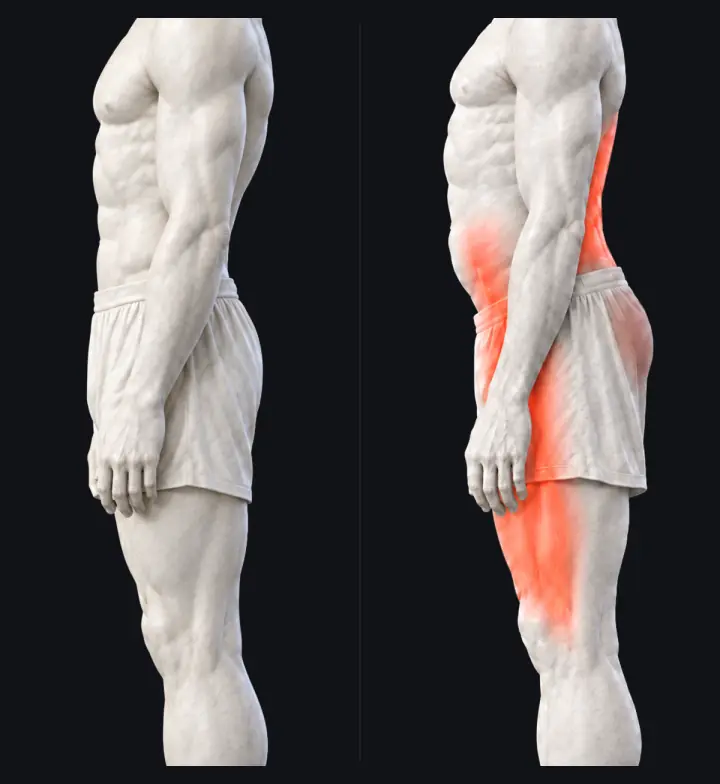
- Working
- Problem: tight or weak
The fix: Stack the pelvis. Glutes back on. The best athletes have big ones.
Why does my back hurt when I haven't hurt it?
The back sits in the middle of the chain. Below it are the feet, knees, hips and pelvis; above it are the ribs, shoulders and head. When something below stops doing its job, the back is often the part that grips to keep you upright. It's a good worker, so it rarely complains until it's been covering for years.
In my experience, most people who play on weekends and sit all week have the same three leaks: feet that turn out, glutes that have gone quiet and a head that sits forward of the shoulders. None of them hurt on their own. Together, they can leave the back doing the work of three other areas.
Is it my lower back or my upper back?
Where it aches is a clue to which leak to check first. A lower back that aches after a long day at a desk usually points at the pelvis: tight hip flexors pull the front of it down, the lower back arches, and it stays switched on all day. The guide to lower back pain from sitting goes deeper on that pattern, and anterior pelvic tilt explains the tipped pelvis itself.
An upper back and neck that ache usually point at screens. When the head drifts forward, the back of the neck and the top of the shoulders hold it up while the muscles between the shoulder blades switch off. That's forward head posture, the third leak.
Why start with the feet for back pain?
Because everything above stands on them. When the feet turn out and the arch drops, the shins and thighs roll in, the pelvis tips and the lower back arches to keep you balanced. You can stretch the back every night and the feet will pull it back into the same shape every morning.
Pointing the feet straight, pressing the big toe down and lifting the arch gives the hips something solid to stack on. It's the least obvious place to start for a sore back, and in my experience the one that makes the rest of the work stick.
When is back pain not a movement problem?
Some back pain needs a doctor before it needs a coach. Get it checked first if any of these apply:
- It started with a fall, a crash or a hard hit.
- Numbness, tingling or weakness runs down a leg.
- You have trouble controlling your bladder or bowels.
- It comes with a fever, weight loss you can't explain, or pain that wakes you at night.
- It's sharp, severe or getting worse week by week.
Everything on this page is movement coaching, there to sit alongside proper care, not replace it.
A 60-second self-test
Feel it now
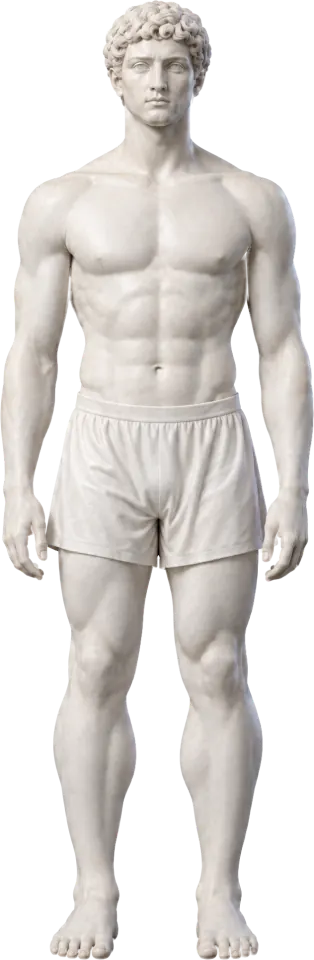
- 1Stand barefoot, feet hip-width apart, both pointing straight ahead.
- 2Press the big toe down without curling it, and lift the arch.
- 3Soften the knees and keep each one over the second toe.
- 4Close your eyes and hold it for 30 seconds.
What pulls is tight. Stretch it.
What shakes or can’t hold is weak. Strengthen it.
On this page, notice
- Does your lower back arch or grip to hold you upright?
- Does the front of the hip pull when you stand tall? That's tight. Do the glutes struggle to hold a squeeze? That's weak.
The app · coming soon
Not sure which leak is yours?
The From the Feet Up app is a posture and movement scan for iPhone. Six standing photos, a squat, a lunge, a reach and a short walk, about five minutes. It reads five areas from the feet up and tells you what to fix first. Free for now.
Your photos are sent once for the read, never kept on our servers, and saved only on your phone.
Hear first when it launches.

Common questions
Can your feet cause back pain?
They can play a part. Feet that turn out with a dropped arch roll the legs in and can tip the pelvis forward, which asks the lower back to arch and grip. It isn't the only cause, but the feet are a smart place to look when the back keeps aching with no injury.
Why does my back hurt after sitting all day?
Sitting keeps the hip flexors short and the glutes switched off. When you stand, the tight front of the hip pulls the pelvis forward and the lower back works to hold you up. Short breaks, glute work and hip flexor stretches often help.
Should I stretch or strengthen for back pain?
Usually both, in the right places. Stretch what pulls, such as tight hip flexors and chest, and strengthen what can't hold, such as glutes, abs and the upper back. Stretching the back alone often feels good for an hour and then fades.
How long does it take for back pain to ease with better posture?
It varies. Some people feel a difference in a few weeks; long-standing patterns can take months. The ache may move around as the body changes. Sharp or worsening pain is a reason to stop and get checked.
When should I see a doctor for back pain?
See a doctor if the pain followed a fall or accident, comes with numbness, tingling or weakness in a leg, affects bladder or bowel control, comes with fever or night pain, or is severe or getting worse.
Educational, not a diagnosis or treatment plan. Sharp, severe, numb or worsening pain needs a qualified professional.