HIP MOBILITY
Tight hips? Open the range, then own it.
Tight hips often come from long sitting and from feet that turn out, which hold the hips in one position all day. Stretching opens range, but the hips keep it only when you can control it. Point the feet straight, stretch the front of the hip, strengthen the glutes at length, and train deep squats and lunges slowly.
By Muhammed Cam, founder · Updated
Where it starts · Sitting
Sitting switched your glutes off.
Sitting is the usual reason hips feel tight: the front shortens, the glutes go quiet and the pelvis tips. Range comes back faster once the pelvis is stacked.
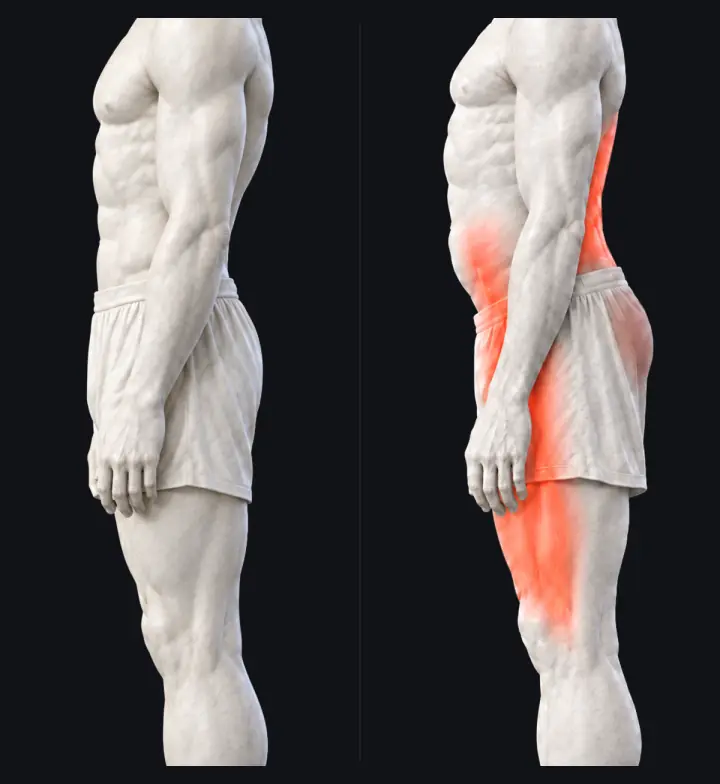
- Working
- Problem: tight or weak
The fix: Stack the pelvis. Glutes back on. The best athletes have big ones.
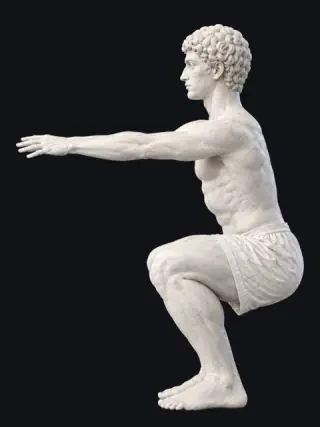
Why are my hips always tight?
Hips adapt to what you do most. Sitting keeps them bent for hours. Turned-out feet hold the thighs in one rotation all day. Old injuries teach the body to guard. Do any of those for years and the hips stop offering range they don't think you need.
Sometimes tight is really weak. A muscle that can't control a position will often tense up to protect it. That's why stretching alone can feel good for an hour and then fade.
Is it tight or is it weak?
Use the self-test below. Stand with the feet straight, big toe down and arches up, close your eyes and feel. Whatever pulls against the position is tight: stretch it. Whatever shakes or can't hold is weak: strengthen it. When I did this I found a tight outer quad and glute on one side and a weak inner thigh on the other. One-sided, which is common.
If the weak link is the glutes, start with the guide to glutes switched off from sitting before chasing more range.
Which hip mobility exercises are worth doing?
A short list, done slowly, beats a long one done fast:
- Deep squat hold: heels down, feet close to straight, 30 to 60 seconds. Hold onto something if you need to.
- Half-kneeling hip flexor stretch: 30 seconds a side, glute squeezed.
- 90/90 switches: sit with both knees bent at right angles and rotate side to side, 8 each way.
- Cossack squat: side to side, as deep as you control, 6 a side.
- Slow split squat: three seconds down, knee over the second toe, 2 sets of 8.
The goal is strength at full length. The splits are on the elite list for that reason: they take strength at full range, not just flexibility. The how to move better guide shows where hip range fits in a daily routine.
How do the feet change the hips?
When the feet turn out, the thighs follow, and the hips spend all day rotated one way. The muscles on the outside of the hip get tight and the inner thighs get weak. Point the feet straight and the hips can sit square again. It's the first leak, and the duck feet guide covers it in full.
A 60-second self-test
Feel it now
- 1Stand barefoot, feet hip-width apart, both pointing straight ahead.
- 2Press the big toe down without curling it, and lift the arch.
- 3Soften the knees and keep each one over the second toe.
- 4Close your eyes and hold it for 30 seconds.
What pulls is tight. Stretch it.
What shakes or can’t hold is weak. Strengthen it.
On this page, notice
- Notice the outside of each hip. Does one side pull harder when the feet point straight?
- Can you hold the position with the knees over the second toes, or do the inner thighs give out?
The app · coming soon
Not sure which leak is yours?
The From the Feet Up app is a posture and movement scan for iPhone. Six standing photos, a squat, a lunge, a reach and a short walk, about five minutes. It reads five areas from the feet up and tells you what to fix first. Free for now.
Your photos are sent once for the read, never kept on our servers, and saved only on your phone.
Hear first when it launches.

Common questions
How long does it take to improve hip mobility?
Most people notice easier movement within a few weeks of daily practice. Lasting range, the kind you can use in sport, usually takes a few months because strength has to catch up with flexibility.
Should I stretch my hips every day?
A few minutes a day works better than one long session a week. Keep it gentle, breathe, and pair stretches with strength work in the same positions.
Can tight hips cause knee pain?
They can contribute. When the hips can't rotate or control the thigh, the knee may twist instead. Hips and feet are both worth checking when a knee aches without an injury.
Why do my hips click?
Painless clicking is common and often harmless. Clicking that comes with pain, catching or locking should be checked by a professional.
Is hip mobility important for athletes?
Very. Sprinting, kicking, cutting and changing direction all need the hips to move freely and be strong at the end of their range. Restricted hips often push the work onto the knees and lower back.
Educational, not a diagnosis or treatment plan. Sharp, severe, numb or worsening pain needs a qualified professional.