FIX YOUR FEET
How to fix your feet, the foundation for everything above.
To fix your feet, give them room and a job. Point them straight, let the toes spread, press the big toe down and lift the arch so the foot works like a spring. Modern shoes turn most feet out and push the big toe in, so the rebuild is daily, slow and feet first. Expect months, not weeks.
By Muhammed Cam, founder · Updated
Where it starts · Shoes
Shoes turned your feet out.
This is the first leak and the first fix. Shoes turn the feet out and push the big toe in. Feet forward is where everything else starts.
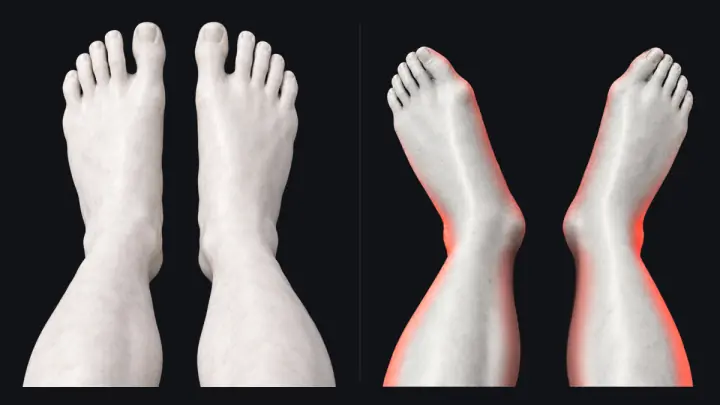
- Working
- Problem: tight or weak
The fix: Feet forward. Point them straight. Wake the arch.
What does a good foot look like?
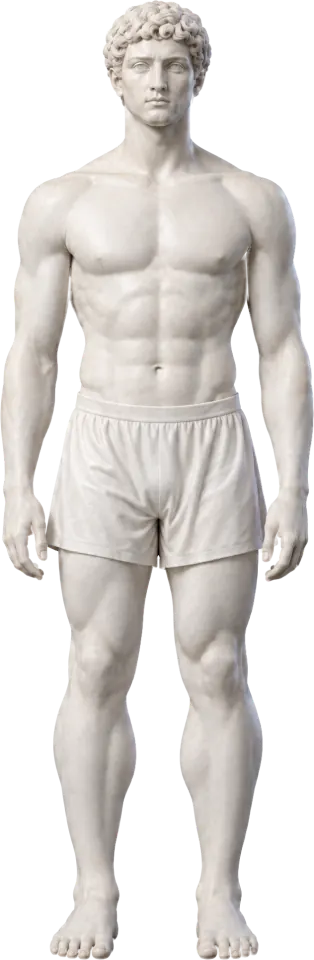
Stand barefoot and look down. In my experience, the feet that move best share a few signs:
- They point straight ahead, not out.
- The big toe is straight and pressing down, with a clear gap before the second toe.
- The inside edge curves in and up at the middle. You can slide a finger or two under the arch.
- The inner ankle bone sits high, not rolled in toward the floor.
- The inner calf is as full as the outer calf.
What goes wrong with modern feet?
Shoes. A narrow toe box pushes the big toe in toward the second toe. A raised heel and a thick, stiff sole do the foot's job for it. Over years the big toe stops pressing, the arch loses its anchor and drops, and the feet turn out to find balance.
That's two problems people search for separately: duck feet and flat feet. In my experience they're usually the same pattern from two angles.
Where do I start?
In three layers, in this order:
- Room: a wide toe box, barefoot time at home, and toe spacers if your toes have been squeezed for years.
- Signal: big toe presses, toe spreads and arch lifts, a few minutes every day.
- Load: slow calf raises, single-leg balance, and walking with the feet straight.
The drills themselves, with reps, are in the foot strengthening exercises guide. If you're thinking about changing shoes, read are barefoot shoes worth it first.
Why fix the feet first?
Because everything above stands on them. Feet that turn out send the knees, hips and back into the same leaks. Fix the base and, in my experience, the aches above often go quiet without chasing each one.
There's a bonus. Pressing the big toe down is what switches on the inner calf. For years I had slim calves and blamed my genes. Once my big toe started working, they finally started to grow. No promises on size, but the muscle you forgot you had is still there.
A 60-second self-test
Feel it now
- 1Stand barefoot, feet hip-width apart, both pointing straight ahead.
- 2Press the big toe down without curling it, and lift the arch.
- 3Soften the knees and keep each one over the second toe.
- 4Close your eyes and hold it for 30 seconds.
What pulls is tight. Stretch it.
What shakes or can’t hold is weak. Strengthen it.
On this page, notice
- Can you press the big toe down without the other toes curling?
- With your eyes closed, does one arch sink before the other?
The app · coming soon
Not sure which leak is yours?
The From the Feet Up app is a posture and movement scan for iPhone. Six standing photos, a squat, a lunge, a reach and a short walk, about five minutes. It reads five areas from the feet up and tells you what to fix first. Free for now.
Your photos are sent once for the read, never kept on our servers, and saved only on your phone.
Hear first when it launches.

Common questions
Can you fix your feet as an adult?
In my experience, yes, much more than most people think. The muscles of the foot respond to training at any age. Bone shape won't change, but how the foot works usually can.
How long does it take to strengthen your feet?
Most people feel the arch and big toe working better within a few weeks. Changing how you stand and walk without thinking usually takes several months.
Do toe spacers work?
They can help the toes spread and remind the big toe where straight is. They work best alongside active foot exercises, so the foot learns to hold the position on its own.
Why does my big toe point inward?
Narrow shoes often push it in over the years. Toe room and big toe exercises may help it straighten. If there's a bony bump, redness or pain at the joint, see a podiatrist.
Should I walk barefoot more?
Barefoot time at home is a good start. Build it gradually, especially on hard floors, and stop if anything gets sharp or sore for days.
Educational, not a diagnosis or treatment plan. Sharp, severe, numb or worsening pain needs a qualified professional.