MOVE BETTER
How to move better: range you can use, not range you borrow.
To move better, build range you can control. Stiffness often comes from hours in one position, so short daily movement beats one long stretch session. Stretch what pulls, strengthen what shakes, and train at full range: deep squats, lunges, hangs and walking with the feet straight. Mobility without strength is borrowed range.
By Muhammed Cam, founder · Updated
Where it starts · Sitting
Sitting switched your glutes off.
Most stiffness comes from staying still, and sitting is where most of us stay still longest. The glutes go quiet and the hips tighten.
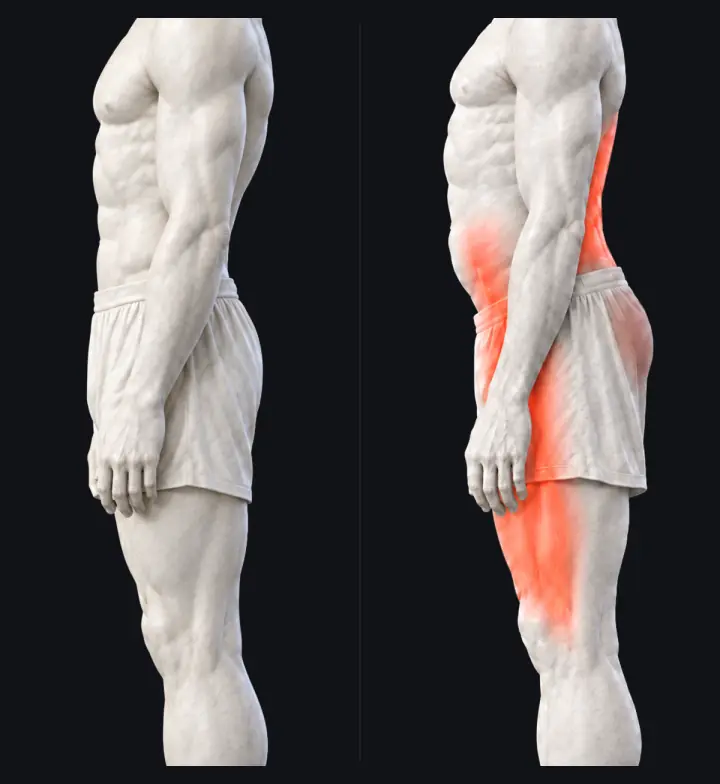
- Working
- Problem: tight or weak
The fix: Stack the pelvis. Glutes back on. The best athletes have big ones.
Why do I feel stiff all the time?
Out of bed, the lower back aches, the knee says good morning and the hips click-clack through the first steps. The Tin Man, each morning. Sound familiar?
The body gets good at what you do most. Sit for hours and it gets good at sitting. Old injuries add guarding, and stress adds tension. Stiffness is often the body protecting range it doesn't trust you to control.
Should I stretch or strengthen?
Both, in the right places. Stand with the feet straight, big toe down and arches lifted, close your eyes and feel. What pulls against the position is tight: stretch it. What shakes or can't hold is weak: strengthen it. Most people find both, and it's usually different on each side.
Then strengthen at the end of the range. A stretch you can't control won't last; the body takes it back. That's what borrowed range means.
What does a daily mobility routine look like?
Ten minutes, spread through the day:
- Morning: deep squat hold for 60 seconds, a dead hang for 20 to 30 seconds, calf raises with the big toe down.
- Midday: stand up, feet straight, squeeze the glutes, open the chest, walk for two minutes.
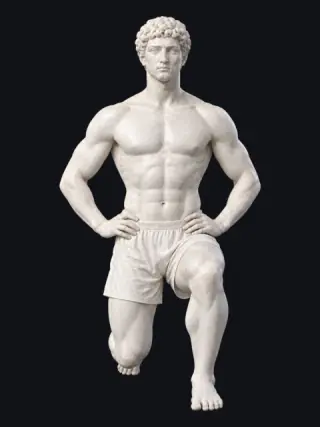
- Evening: half-kneeling hip flexor stretch, 90/90 hip switches, and some time sitting or kneeling on the floor.
For more on the hips, read hip mobility. For the neck and shoulders, read forward head posture.
How do I know I'm moving better?
Test it. The six benchmarks, from good to elite, are: the Big Toe Test and a deep squat; kneeling on the feet and a pistol squat; the splits and barefoot distance. Pick the one you can almost do and work toward it.
If you're starting from aches rather than stiffness, begin with how to fix my body. If you want to play faster, read how to become a better athlete.
A 60-second self-test
Feel it now
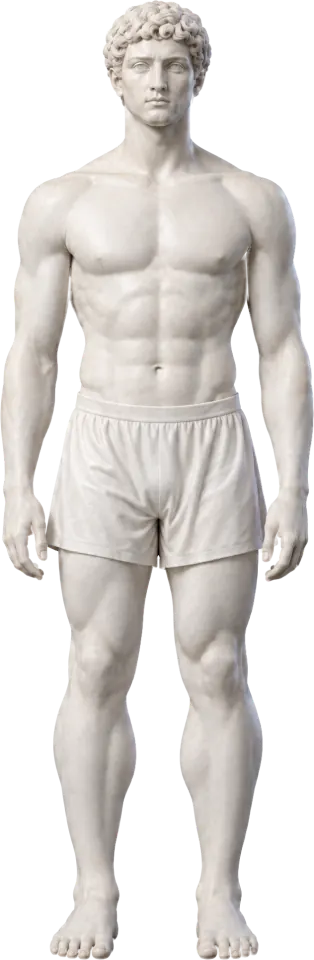
- 1Stand barefoot, feet hip-width apart, both pointing straight ahead.
- 2Press the big toe down without curling it, and lift the arch.
- 3Soften the knees and keep each one over the second toe.
- 4Close your eyes and hold it for 30 seconds.
What pulls is tight. Stretch it.
What shakes or can’t hold is weak. Strengthen it.
On this page, notice
- Notice the difference between pull and shake. Pull means stretch; shake means strengthen.
- Check both sides. Stiffness is rarely even.
The app · coming soon
Not sure which leak is yours?
The From the Feet Up app is a posture and movement scan for iPhone. Six standing photos, a squat, a lunge, a reach and a short walk, about five minutes. It reads five areas from the feet up and tells you what to fix first. Free for now.
Your photos are sent once for the read, never kept on our servers, and saved only on your phone.
Hear first when it launches.

Common questions
How can I improve my mobility fast?
Daily practice beats long sessions. A few minutes of deep squats, hangs and hip stretches every day often makes a noticeable difference within a few weeks.
Is stretching enough to move better?
Usually not. Stretching opens range, but strength in that range is what lets you keep it and use it in sport.
How long should a mobility routine take?
Ten to fifteen minutes a day, split up if you like, is enough for most people. Consistency matters more than length.
Why am I stiff in the morning?
Hours of lying still let muscles and joints settle. A short morning routine often helps. Morning stiffness that lasts a long time, or comes with swollen joints, should be checked by a doctor.
Can you improve mobility after 40?
Yes. The body adapts at any age. It may take a little longer, so be patient and train a little every day.
Educational, not a diagnosis or treatment plan. Sharp, severe, numb or worsening pain needs a qualified professional.