BAREFOOT SHOES
Are barefoot shoes worth it? A tool, not the whole fix.
Barefoot shoes can be worth it if your feet are ready. A wide toe box lets the big toe point straight and the toes spread, and a thin, flat sole lets the foot feel the ground and work. Switch slowly, over months, and pair the shoes with foot strength work, or the calves and arches may get overloaded.
By Muhammed Cam, founder · Updated
Where it starts · Shoes
Shoes turned your feet out.
This is where the first leak starts: shoes that squeeze the toes and do the foot's work. The fix is feet forward, and the right shoe makes it easier.
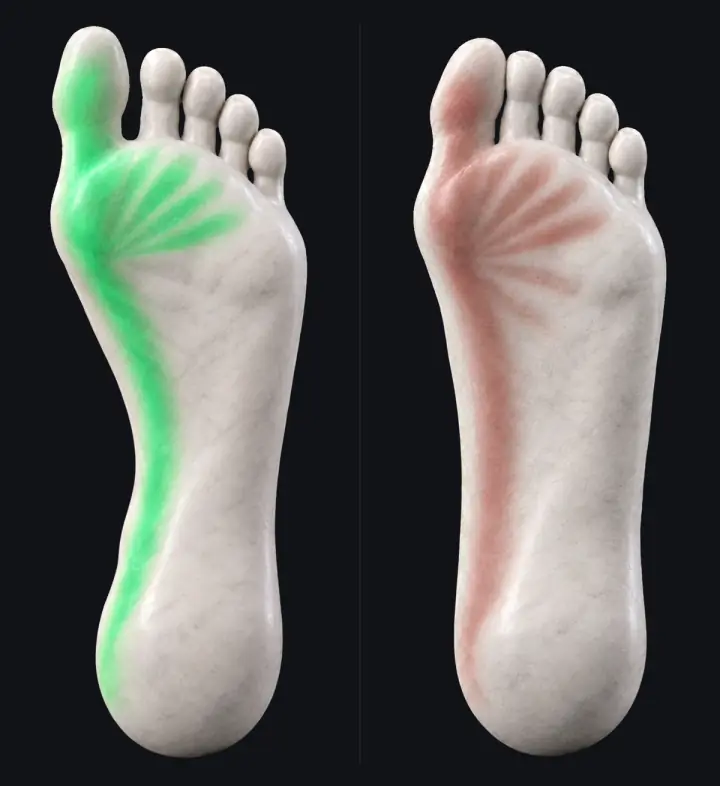
- Working
- Problem: tight or weak
The fix: Feet forward. Point them straight. Wake the arch.
What makes a shoe a barefoot shoe?
Four things, and each one gives a job back to the foot:
- A wide toe box, shaped like a foot, so the toes can spread and the big toe can point straight.
- Zero drop: the heel sits level with the toes, so the calf and ankle work through their full range.
- A thin, flexible sole, so the foot feels the ground and bends where it should.
- No built-in arch support, so the arch has to hold itself up.
Do barefoot shoes make your feet stronger?
They let the foot work, and work is what builds strength. Some small studies have found that people who switched to minimalist shoes built bigger, stronger foot muscles over a few months. The shoe itself doesn't do it. Using the foot does.
That's why I treat them as a tool. A wide toe box gives the big toe room to straighten; it still has to learn to press down. Pair the shoes with the drills in foot strengthening exercises.
How do I switch to barefoot shoes safely?
Slowly. Feet that have been in cushioned shoes for years need time:
- Start with an hour or two a day of walking, and build week by week.
- Walk in them for a few weeks before you run in them.
- Keep the first runs short, five to ten minutes, and add a little each week.
- Expect tired calves and arches. Sharp pain, or pain that lasts for days, means back off.
- Keep your old shoes for long days on your feet while you transition.
What if I can't wear barefoot shoes all the time?
Most of the benefit comes from toe room and time spent barefoot. Look for regular shoes with a wider toe box, go barefoot at home, use toe spacers in the evening, and do your foot drills every day. The full plan is in how to fix your feet.
If you have heel pain right now, a sudden switch to thin soles isn't the move. Read the plantar fasciitis guide and get a professional view first.
A 60-second self-test
Feel it now
- 1Stand barefoot, feet hip-width apart, both pointing straight ahead.
- 2Press the big toe down without curling it, and lift the arch.
- 3Soften the knees and keep each one over the second toe.
- 4Close your eyes and hold it for 30 seconds.
What pulls is tight. Stretch it.
What shakes or can’t hold is weak. Strengthen it.
On this page, notice
- Try it in your everyday shoes, then barefoot. Can the big toe press down and the toes spread in the shoes?
- If the toes feel squeezed when the big toe straightens, the toe box is too narrow.
The app · coming soon
Not sure which leak is yours?
The From the Feet Up app is a posture and movement scan for iPhone. Six standing photos, a squat, a lunge, a reach and a short walk, about five minutes. It reads five areas from the feet up and tells you what to fix first. Free for now.
Your photos are sent once for the read, never kept on our servers, and saved only on your phone.
Hear first when it launches.

Common questions
Are barefoot shoes good for flat feet?
They can help a flexible flat foot work harder, because there's no arch support doing the job. Switch slowly and pair them with arch exercises. If your flat feet are painful or rigid, check with a professional first.
Are barefoot shoes good for running?
They can be, once the feet and calves are ready. Build up gradually over months. Switching too fast is the most common way people get hurt in them.
How long does it take to get used to barefoot shoes?
For walking, a few weeks for most people. For running, often a few months. Let soreness guide the pace.
Can barefoot shoes cause injuries?
Switching too quickly can overload the calves, Achilles and feet. A gradual change and foot strength work keep that risk down.
Do I need barefoot shoes to fix my feet?
No. They make it easier, but toe room, barefoot time and daily foot exercises matter more than any single shoe.
Educational, not a diagnosis or treatment plan. Sharp, severe, numb or worsening pain needs a qualified professional.