FLAT FEET
Flat feet: can the arch still work like a spring?
Flat feet means the arch sits low or drops to the floor when you stand. If the arch appears when you sit or rise onto your toes, the flat foot is usually flexible, and exercises can often help it work better. Point the feet straight, press the big toe down, lift the arch and build calf and foot strength.
By Muhammed Cam, founder · Updated
Where it starts · Shoes
Shoes turned your feet out.
Flat feet usually travel with the first leak. As the feet turn out and the big toe gets pushed in, the arch loses its anchor and drops.
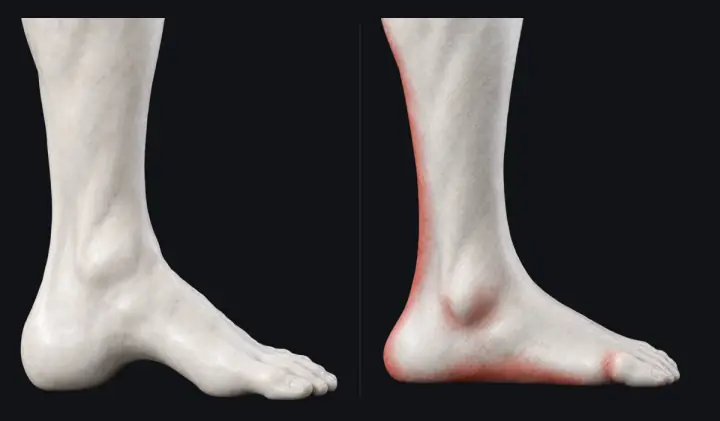
- Working
- Problem: tight or weak
The fix: Feet forward. Point them straight. Wake the arch.
Watch the ankle. It rolls in, the arch drops, then both come back up.
Do I have flat feet?
Stand barefoot on a hard floor and check:
- Can you slide a finger under the middle of the inside of your foot? On a working arch, you can.
- Does the inner ankle bone roll in toward the floor?
- Does the big toe angle in toward the second toe?
- Now rise onto your toes. If the arch appears, the flat foot is flexible.
A flexible flat foot is the kind that often responds to training. A flat foot that stays flat on tiptoe, or that hurts, should be looked at by a podiatrist or physio.
Why do arches fall?
In my experience, flat feet are mostly a result of turned-out feet and bad mechanics. When the feet point out, weight rolls onto the inside of the foot and the arch drops. When narrow shoes push the big toe in, the arch loses one of its anchors. Read duck feet alongside this guide; they're usually the same problem.
The arch isn't meant to be a rigid bridge. It should lower a little as you land and spring back as you push off. The goal isn't a high arch, it's an arch that works.
Which exercises help flat feet?
Start gently and do them daily, barefoot:
- Short foot: draw the ball of the foot toward the heel without curling the toes. Hold five seconds, 10 reps.
- Big toe press with the other toes lifted: 10 each side.
- Calf raise with a small ball held between the heels, so the arch lifts as you rise: 2 sets of 12.
- Single-leg balance with the arch held: 30 seconds a side.
- Walking with the feet straight, pushing off the big toe.
The full progression is in foot strengthening exercises.
Can flat feet affect my knees and back?
They can play a part. When the arch drops, the shin rolls in and the knee tends to follow it, which is one reason knees caving in and flat feet often go together. Further up, the thighs roll in and the pelvis can tip forward. Plenty of people with flat feet have no pain at all, so treat it as a clue, not a verdict.
A 60-second self-test
Feel it now
- 1Stand barefoot, feet hip-width apart, both pointing straight ahead.
- 2Press the big toe down without curling it, and lift the arch.
- 3Soften the knees and keep each one over the second toe.
- 4Close your eyes and hold it for 30 seconds.
What pulls is tight. Stretch it.
What shakes or can’t hold is weak. Strengthen it.
On this page, notice
- When you lift the arch, does the big toe stay down, or does it lift too?
- With your eyes closed, which arch sinks first? That's your weaker side.
The app · coming soon
Not sure which leak is yours?
The From the Feet Up app is a posture and movement scan for iPhone. Six standing photos, a squat, a lunge, a reach and a short walk, about five minutes. It reads five areas from the feet up and tells you what to fix first. Free for now.
Your photos are sent once for the read, never kept on our servers, and saved only on your phone.
Hear first when it launches.

Common questions
Can flat feet be corrected in adults?
A flexible flat foot can often work much better with training: a stronger arch, an active big toe and feet pointing straight. Bone structure won't change, and rigid or painful flat feet need a professional opinion.
Are flat feet bad?
Not necessarily. Many people with flat feet have no problems. It matters more whether the arch can load and spring back, and whether the knees stay on line.
Should I wear arch supports for flat feet?
Supports can make painful feet more comfortable, and a professional may recommend them. They hold the arch up for you, so pair them with exercises that teach the arch to work on its own.
What's the difference between flat feet and overpronation?
Flat feet describes the shape of the arch when you stand. Overpronation describes the foot rolling in too far as you move. They often go together, but not always.
Can flat feet affect sport?
They can make it harder to push off through the big toe and keep the knees on line when you land and cut. Strengthening the arch often helps players feel quicker and more stable.
Educational, not a diagnosis or treatment plan. Sharp, severe, numb or worsening pain needs a qualified professional.